At the western foothills of Mt. Apo, the highest mountain in the Philippines and a still-active volcano, rain meets ancient volcanic earth.
For generations, the mountain has shaped the land below. Rainwater moves through its volcanic slopes, carrying naturally occurring potassium, phosphorus and trace minerals into the fertile soils where our coconut palms grow.
Potassium, in particular, is one of the most important nutrients for coconut trees, supporting healthy growth and helping the palms develop abundant fruit and coconut water.
The porous volcanic earth provides something equally important: natural drainage. Excess rainfall can move through the soil, while moisture remains available to the roots.
Here, coconut palms grow alongside coffee, cacao and tropical fruit, sharing the extraordinary fertility of the foothills.
The highest peak in the Philippines, and a still-active volcano.
QR-enabled provenance and immutable blockchain records, grove to bottle.
Nothing added, nothing taken away. Raw coconut water and tender coconut meat.
This is where our coconuts begin.
And this is where our story becomes traceable.
From the coconut grove to harvest, processing and every stage along the journey, we document the provenance of our coconuts through QR-enabled traceability and state-of-the-art immutable blockchain technology creating a permanent record of where they came from and how they became APOCOCO.
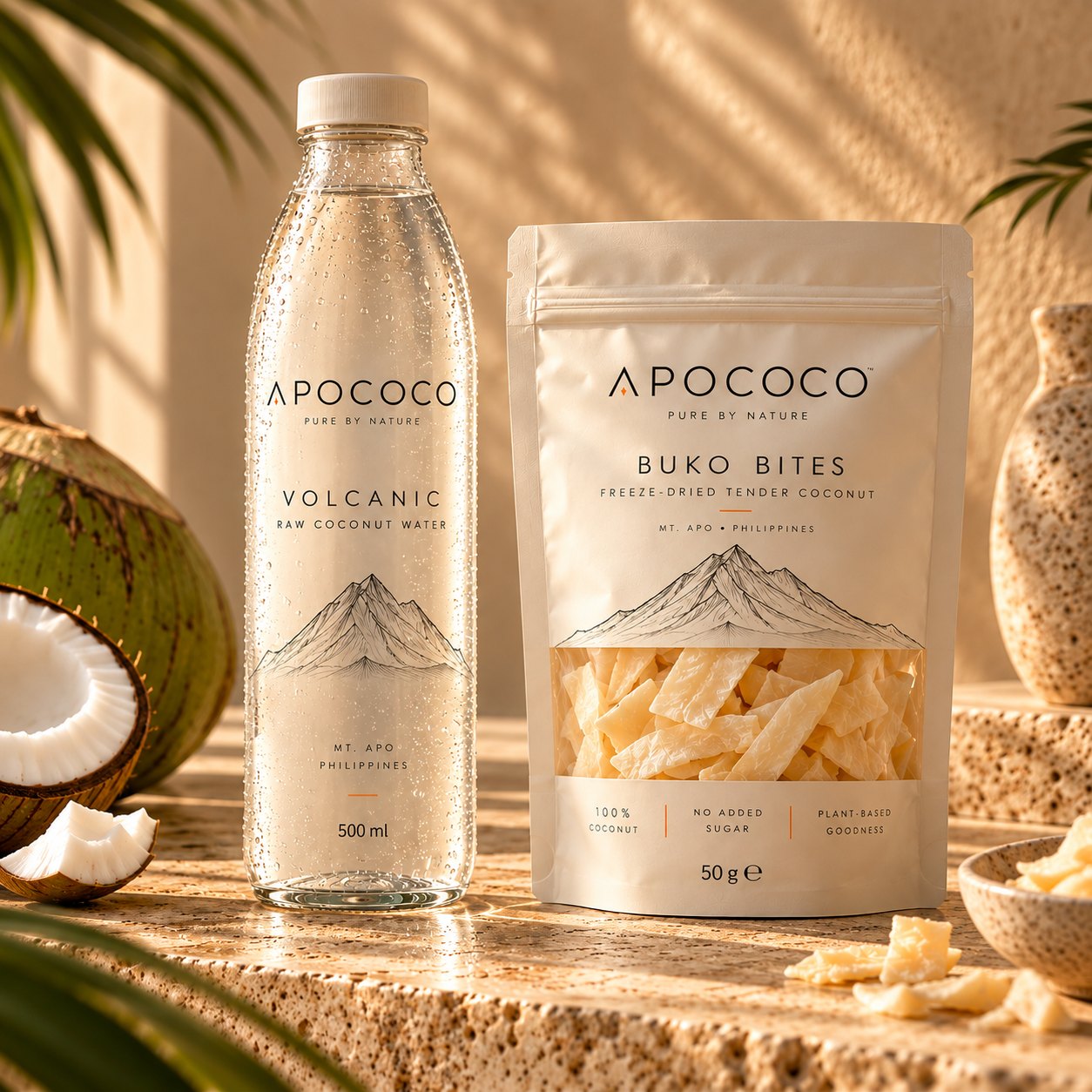
We harvest them for what nature has put inside: raw coconut water and tender coconut meat, with nothing added and nothing taken away.
This is Kidapawan. A place known as the fruit basket of the Philippines, where the mountain, the soil, the rain and generations of farming have created a remarkable place for growing.
Perhaps this little corner of the Philippines was always meant to do exactly this.
Now, we are bringing its story beyond the mountain.
Join us for early access as APOCOCO prepares to launch across the GCC, beginning with the UAE in 2027.